This site contains clinical information for registered UK healthcare professionals only.

Take me to the patient site

Advancing hypo recovery for people living with type 1 diabetes

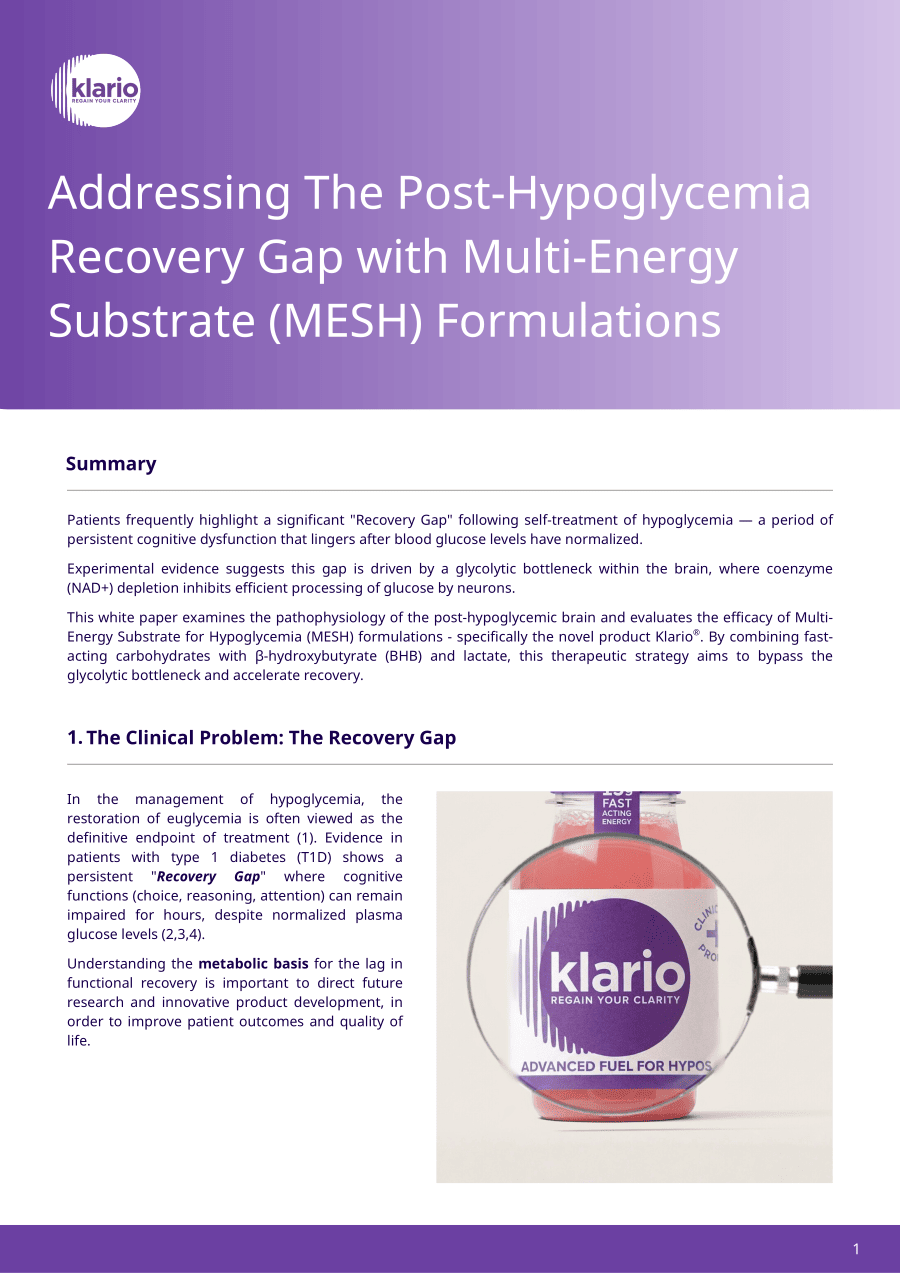
Klario is a first-in-class hypo recovery drink combining glucose with BHB to help people feel and function better after low blood sugar.

Klario Energy hypo recovery drink — bottle and poured glass

Hypoglycemia remains a frequent and feared complication

For many people with type 1 diabetes, hypos are not occasional events — they are repeated disruptions to daily life. Standard glucose-only treatments correct blood sugar but leave many patients with rebound highs, recurrent lows, and a lingering hypo 'hangover.'

100–200
hypos per person, per year
77%
report problems with hypo products
2 weeks
lost to hypo episodes per year
Brain fog
glucose fixes the low, but not the after-effects
Klario MESH™ formula product photo

A different approach to hypoglycemia recovery

Klario® is a novel recovery drink that combines 15g of fast‑acting carbohydrate with adaptive energy sources - beta‑hydroxybutyrate and lactate.

Its proprietary multi-substrate system, MESH™, was designed to support rapid blood glucose correction and sustained brain energy recovery after a hypo.

Read more about the science →

Proven in a 12-week randomized crossover study in adults with T1D

Klario is validated through two randomized clinical studies, analyzing more than 1,000 real-world hypoglycemic episodes.

Read the clinical study →
Pivotal study at a glance
DesignRandomized controlled crossover study
ComparatorStandard of care glucose gel
Duration12 weeks
PopulationAdults with type 1 diabetes
MonitoringContinuous glucose monitoring (CGM) + PROs
CGM DATA

Klario was associated with higher post‑hypoglycemia Time‑in‑Range and fewer recurrent episodes versus participants' usual glucose‑only products.

27%
Reduced risk of a recurrent hypo following treatment vs standard of care
↑ TIR
Improved time-in-range in the 2 hours following a treated hypo vs standard of care
5 hours
Less time spent in extreme highs and lows per week
PRO DATA

Participants reported fewer “hypo hangover” symptoms, faster return to normal activities, and less severe after-effects such as brain fog and fatigue.

92%
Rarely or never experienced hypo hangover symptoms with Klario
75%
Got back to their normal day faster after a hypo when using Klario
82%
Felt more in control of hypo management with Klario

Hear from patients who have used Klario

Clinical outcomes tell part of the story. Julia, a clinical study participant, describes what complete recovery with Klario looked like for her — and why it matters.

Download patient leaflet →
FREE MEMBERSHIP PROGRAM

Advancing the standard of hypo care — together

SHIFT (Supporting Hypoglycemia Innovation and Future Treatments) is a free membership program for diabetes care professionals. Join a growing community dedicated to improving patient outcomes in hypo management.

🔬
Complimentary clinical trial samples

Access an initial supply of Klario to evaluate with your patients.

🎓
CPD-accredited webinars and peer forums

Educational sessions with leading diabetes clinicians and researchers.

📋
Clinical resources and patient materials

Ready-to-use patient leaflets and prescribing guides.

🩺
Emerging research & guideline influence

Explore future research collaborations and help shape hypoglycemia management standards.

🏷️
Access exclusive discounts

Receive discounts and special offers for your clinic and your patients.

DR
SN
GP
+
Join a growing community of diabetes care professionals.

Peer-reviewed research underpinning Klario

Diabetes, Obesity and Metabolism
December 2025
A novel glucose–beta-hydroxybutyrate combination improves hypoglycemia recovery and patient-reported outcomes in type 1 diabetes
A randomized crossover clinical study assessing the effectiveness of Klario for recovery from hypoglycemia compared with standard glucose treatment.
Read publication →
Diabetes, Obesity and Metabolism
March 2026
Beyond glucose: a brain energy bottleneck hypothesis for multi-energy substrates in hypoglycemia rescue
A peer-reviewed scientific commentary summarizing the evidence for the brain energy bottleneck during and after hypoglycemia.
Read publication →
Diabetic Medicine
February 2025
A structured patient-led assessment exploring real-world limitations of current glucose-only treatments for hypoglycemia in adults.
Read publication →

Beyond glucose: bypassing the brain energy bottleneck

Evidence shows that during and after a hypo, the brain's ability to convert glucose into usable energy can be temporarily impaired.

This 'bottleneck' can mean that even once blood sugar is corrected, energy supply to neurons may still lag.

The human brain can efficiently utilize alternative energy sources like beta-hydroxybutyrate and lactate, particularly during glucose scarcity.

These follow different metabolic pathways, bypassing the energy bottleneck and delivering an efficient energy supply to the brain.

Applying multi-energy substrates for hypoglycemia (MESH™) approaches may help restore blood glucose and brain energy.

A scientific advisory board at the forefront of diabetes care

Klario's MESH™ formula and research program have been developed in collaboration with leading clinicians and researchers in diabetes, metabolic medicine, and exercise physiology.

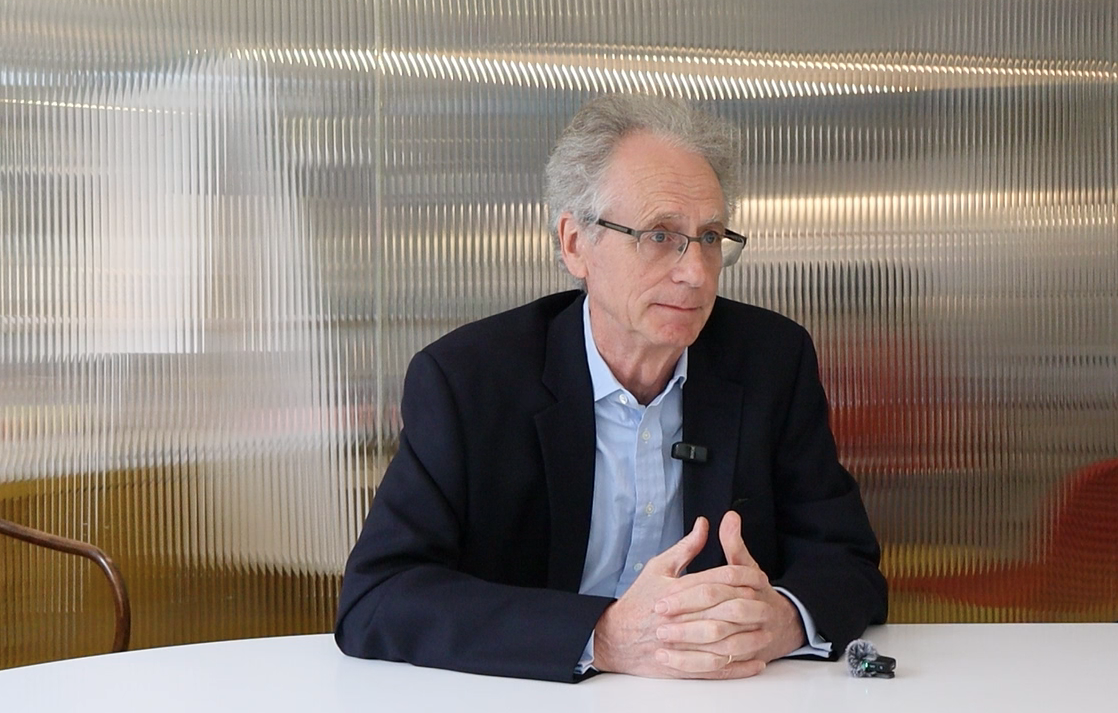
Prof. David Russell-Jones, Professor of Diabetes & Endocrinology, University of Surrey
Prof. David Russell-Jones
Co-inventor & Principal Investigator
Professor of Diabetes & Endocrinology, University of Surrey
Prof. Mike Laffan, Consultant Physician, Imperial College London
Prof. Mike Laffan
Scientific Advisor
Consultant Physician, Imperial College London
Dr. Richard Littlewood, Flow Health Science
Dr. Richard Littlewood
Co-inventor
Physician (30+ yrs). Pharma & consumer health strategy. Founded Flow Health Science.

Educational resources

View all resources →
  • D. Russell-Jones, M. Laffan, and J. Mader, "Beyond Glucose: A Brain Energy Bottleneck Hypothesis for Multi-Energy Substrates in Hypoglycemia Rescue," Diabetes, Obesity and Metabolism 28, no. 5 (2026): 3474–3479, https://doi.org/10.1111/dom.70632.
  • Russell-Jones D, et al. A novel glucose beta-hydroxybutyrate combination improves hypoglycaemia recovery and patient-reported outcomes in type 1 diabetes. Diabetes Obes Metab. 2026; 1-8. doi:10.1111/dom.70323
  • O'Donnell, S., et al. (2021). Impact of hypoglycemia on quality of life and family life of people with type 1 diabetes and their partners. BMJ Open Diabetes Research & Care, 9(1), e002322. https://doi.org/10.1136/bmjdrc-2021-002322
  • Louis Monnier, David Owens, New paths to attenuate the burden of hypoglycaemia in type 1 diabetes, Diabetes, Obesity and Metabolism, 10.1111/dom.70512, (2026).
  • Frier BM et al. Impact of hypoglycaemia on work productivity and daily functioning. 2016. https://pubmed.ncbi.nlm.nih.gov/26248501/
  • Suh, S. et al. (2004) "Zinc release contributes to hypoglycemia-induced neuronal death," Neurobiology of Disease, 16(3), pp. 538–545. https://doi.org/10.1016/j.nbd.2004.04.017.
  • Won, S.J. et al. (2012) "Prevention of Acute/Severe Hypoglycemia-Induced Neuron Death by Lactate Administration," Journal of Cerebral Blood Flow & Metabolism, 32(6), pp. 1086–1096. https://doi.org/10.1038/jcbfm.2012.30.

Get the Klario for Professionals Newsletter

Sign up to receive the latest product news, research updates and educational resources.

Questions about Klario or SHIFT?

We've answered the most common clinical and practical questions on our FAQ page.

View full FAQ →